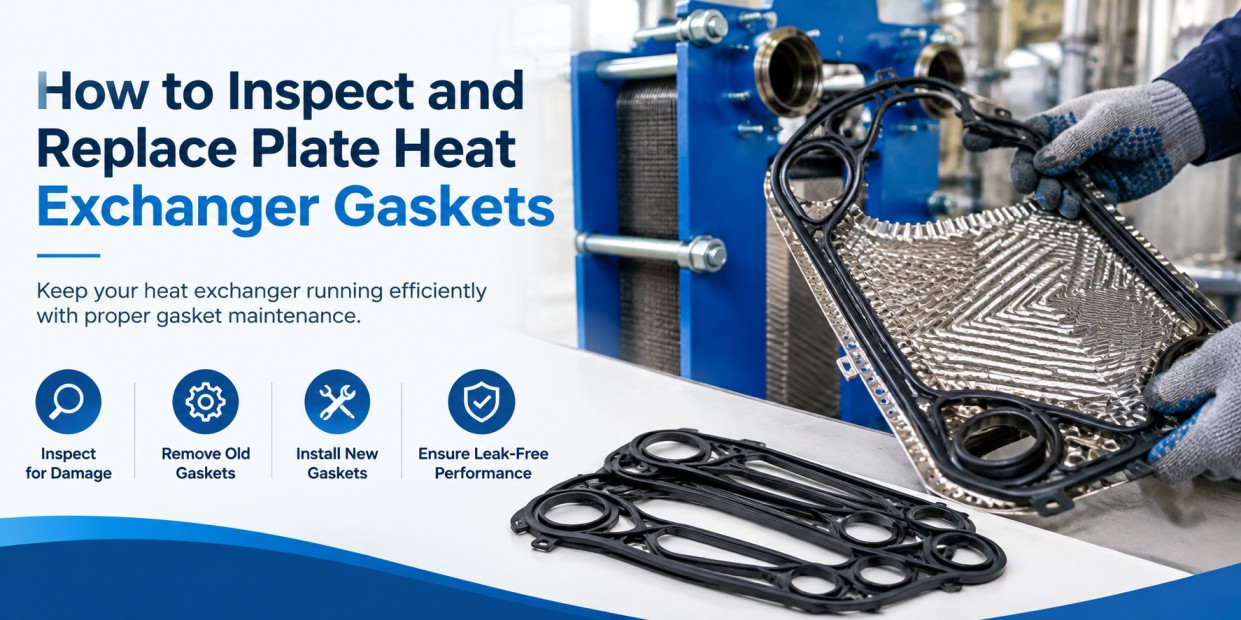
How to Inspect and Replace Plate Heat Exchanger Gaskets
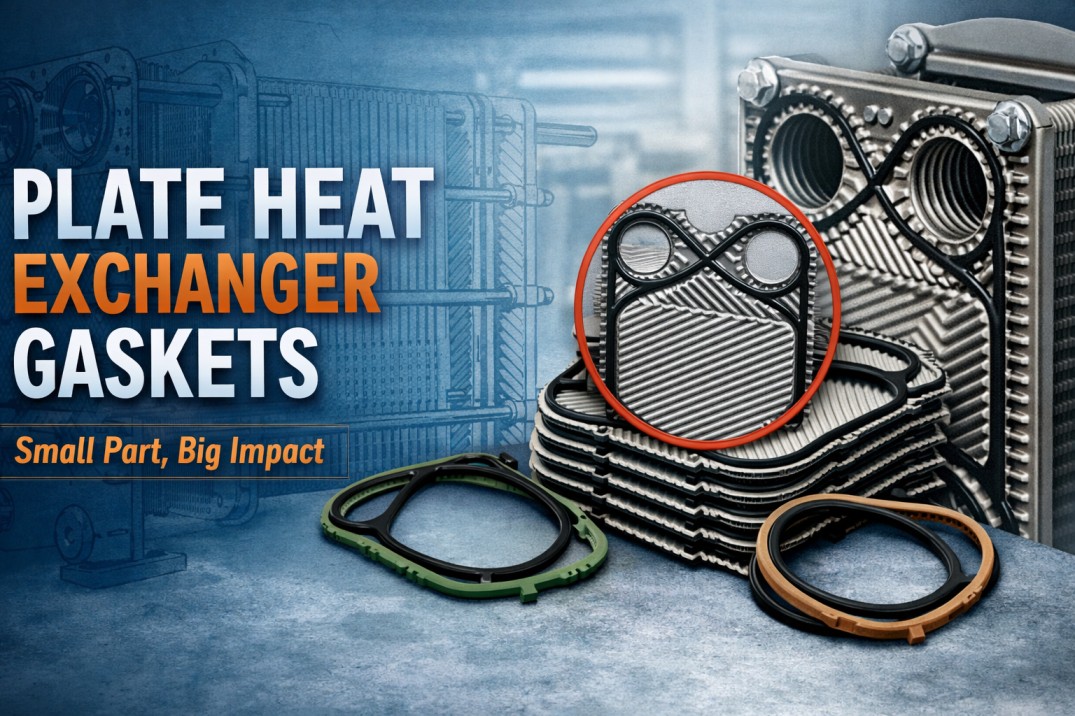
Plate Heat Exchangers, over the years, prove to be reliable and efficient equipment. However, the efficiency and service life of a Heat Exchanger ultimately depend on the sealing elements of the plate gaskets. Plate gaskets perform a crucial function of sandwiched between plates of a plate heat exchanger to create a seal between the plates and to prevent fluid leakage.
Gaskets over the years are affected due to operational conditions, chemical attack, and other factors. Loss of elasticity, cracks and other deformations lead to fluid leakage, inadequate heat transfer and cross contamination.
It is important that inspection and other routine maintenance be performed. During inspection, the following should be looked for
- Hardness and brittleness
- Loss of elasticity and other deformations
- Loose portions
- Attacked and broken areas
- Flattened areas and other deformations
Cross contamination and leakage occur due to defective gaskets. It is important that defective gaskets be replaced to restore efficient operation of the heat exchanger. During maintenance, if defects are found on several gaskets, it is important that the operating conditions of the heat exchanger be checked to see if the conditions are within allowable limits.
Similarly to gasket selection, the material of the gasket being replaced is very important. Properties such as chemical and temperature resistance dictate what material is best suited for the gasket.
Inspection of Gaskets
Prior to accessing gaskets, verify the heat exchanger is in a safe condition to open. The accumulations of dirt, scale and corrosion can be found in numerous locations, and may interfere with proper sealing of the gaskets. Look at the gasket grooves and the gasket material itself for irregularities. Corner areas of the gaskets and areas adjacent to ports may show signs of stress and are to be looked at carefully. Having a new gasket may be beneficial in determining the causes of irregularities of worn gaskets.
Replacing Gaskets
New gaskets may be pre-cut to size. Although the new gaskets are of good quality, leaks may occur due to improper installation. The old gaskets are removed from grooves, taking care not to mar the plate surface. Like the gaskets, the grooves may contain scale and other deposits, which may also effect the seal.
- Install the New Gasket
Position the gasket in the groove to check if it is evenly seated, and check if all the ports and corners are in the right location.
Heat exchangers can use different methods to hold the gaskets in place. Some can use an adhesive or a glue, or a system that holds the gaskets in place without the use of an adhesive or glue, or a system that uses clips to hold the gaskets in place. The method to be used will depend on the manufacturer of the heat exchanger.
- Reassemble the Plates
The plates should be placed in the same position as they were originally. Reversing the position of the plates can result in flow distribution issues and a loss of heat transfer.
- Tighten the Heat Exchanger
The plate pack should be closed gradually, and the manufacturer’s directions for the heat exchanger should be adhered to. The directions will specify dimensions for heat exchanger tightness. Blindly tightening the plates as much as possible can result in damage to the heat exchanger.
- Test Before Returning to Service
Prior to returning a unit to service, the manufacturer must specify or perform tests to confirm that the unit is free from leaks and operable at the specified working pressure. External leakage and cross contamination must be evaluated.
Tips to Improve Gasket Life
Gasket service life can be improved by the following:
- Use a gasket material that is compatible with the process fluid.
- Avoid running the process fluid above the design limits of the gasket.
- Follow the specified procedure for cleaning the gasket.
- Avoid operating the equipment so that the gaskets are subjected to high temperature.
- Inspect the gaskets as part of a planned maintenance.
- Store spare gaskets in a clean and dry location.
Frequently Asked Questions
- What is the recommended replacement interval for plate heat exchanger gaskets?
Plate heat exchanger gaskets should be replaced when recommended by an inspection or when a gasket failure is evident. Under some conditions, replacement may be required every few months, while in other conditions, replacement may not be required for many years.
- Is it permissible to replace a single gasket?
Yes, that is possible. However, if multiple gaskets are showing similar signs of wear, it may be better to replace the entire gasket set.
- How do I determine the right type of gasket for me?
Depends on the application conditions (fluid, temperature, pressure, chemicals, etc.) as well as the recommendations of the heat exchanger manufacturer.
- Why do replacent gaskets lead to a leak?
This can be attributed to several reasons including: not sealing in the correct position, a dirty seal, deformation of the plate, an improper compression, an inexect specification, or usage.
Conclusion
Maintaining the gaskets of a plate heat exchanger is a simple and efficient way to improve performance and prevent major issues. It is essential to routinely check for issues.
When the time comes to replace the gaskets it is important to clean the contacts, ensure the correct gaskets are used, and follow the manufacturers instructions. This will reduce the risk of leaks.





.jpg)
.jpg)
.webp)